 Appointify AI
Appointify AI › Blog › Can the AI Gather Consent and Record Compliance for Calls?
← All articlesCan the AI Gather Consent and Record Compliance for Calls?
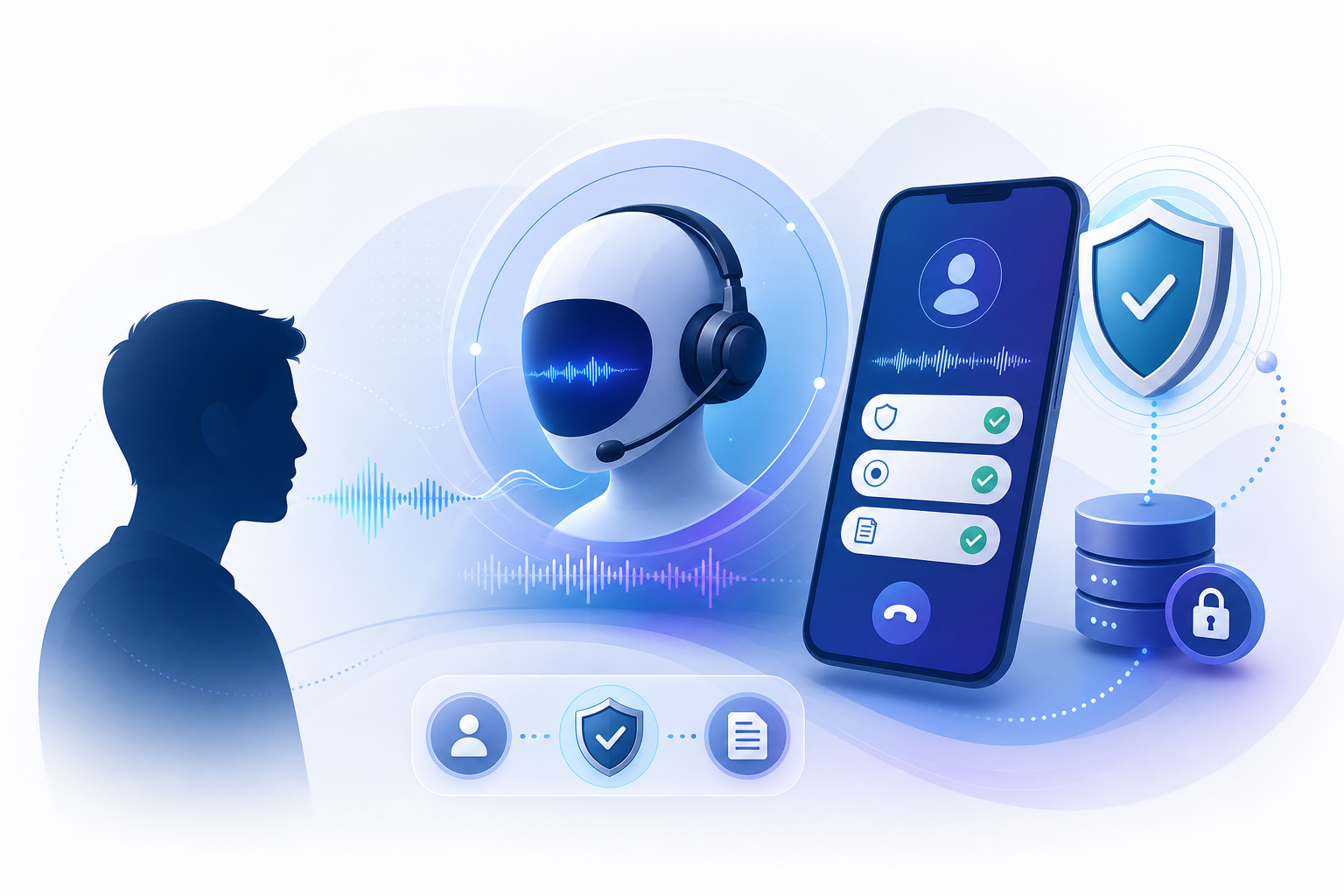
Yes. A voice AI can gather call-recording consent and document compliance if the system is designed to announce recording, capture and verify consent, apply the right jurisdiction rules, and retain audit evidence. The practical requirement is not “AI or human,” but whether the workflow produces defensible records, disclosures, and controls.
Can AI legally gather consent and record compliance for calls?
Yes, AI can gather consent for call recording and document compliance, but legality depends on how the workflow is implemented and which laws apply. The key issue is whether the system provides proper notice, captures consent when required, and stores evidence in a usable audit trail.
In practice, modern voice systems already support these tasks. For example, eConsent Voice API is built specifically for consent workflows, including checking consent before dialing, capturing real-time verbal consent during the call, and exporting a certificate with an audio hash and disclosure timeline. That is the kind of evidence a business needs if a consent process is challenged later.
Other vendors frame compliance as a system-level requirement rather than a script. Assistents.ai Guardrails describes consent tracking, PII redaction, and audit logs as part of the voice AI control layer. VaniVx similarly emphasizes consent logging, recording notices, opt-out detection, suppression lists, calling windows, and audit logs.
The short answer is that AI can do this, but only if consent handling is treated as a core product capability rather than a simple recording toggle.
What does an AI system need to do to capture call-recording consent correctly?
An AI system needs to provide notice, collect the caller’s response, apply the right rule for the call, and save proof of what happened. A compliant workflow is operational, not just conversational.
A strong consent flow usually includes:
- A pre-call or opening disclosure that the call may be recorded
- A jurisdiction-aware rule set for one-party or all-party consent scenarios
- A clear yes or no response capture
- Logic to stop, pause, or continue based on the response
- Time-stamped logs, transcripts, or audio proof
- Redaction and retention controls for sensitive data
Several current products illustrate these components. Aircall offers outbound recording announcements, manual inbound recording after verbal consent, pause-and-resume recording, and regional data residency options. Acepeak lists state-specific configurable consent rules, automatic redaction for PCI, PHI, and SSN data, retention settings, and audit logs.
That matters because compliance is not just “did the AI ask?” It is also “did the system enforce the result?”
Can AI verify consent and create an audit trail for regulators or internal review?
Yes, voice AI can verify consent and create a detailed audit trail when the platform records the disclosure, response, and subsequent handling of the call. The most useful systems preserve evidence that can be reviewed later by compliance teams, customers, or regulators.
A credible audit trail can include:
- The disclosure wording used
- When the disclosure was played or spoken
- The caller’s recorded response
- Whether recording was started, paused, resumed, or disabled
- Transcript or event logs
- Redaction events
- Retention and deletion history
The clearest example in the research brief is eConsent Voice API, which says it can generate a secure certificate containing an audio hash and disclosure timeline. Assistents.ai Guardrails also highlights audit logs and verification-oriented controls. Callpilot positions its output as regulator-ready evidence packages and continuous compliance recording.
For businesses evaluating a voice-first sales or lead-capture tool, this is the distinction to look for: not just whether the AI can talk, but whether the system can prove what it said and what the caller agreed to.
Does call-recording compliance only mean recording consent?
No. Call-recording compliance is broader than the consent prompt. A compliant voice workflow also needs to manage disclosure rules, data handling, opt-outs, calling restrictions, and sensitive information.
That broader scope shows up repeatedly across the vendors in the research brief. VaniVx includes DND and opt-out detection, suppression lists, calling windows, and automatic AI disclosure where required. Acepeak emphasizes automatic redaction of payment and health-related data as well as retention controls. Aircall includes pause-and-resume recording, which is useful when sensitive information should not remain in the recording.
In other words, a compliant process usually includes at least four layers:
1. Consent and disclosure
2. Recording control
3. Sensitive-data protection
4. Evidence retention and auditability
If one of those layers is missing, the compliance story is weaker.
How should a business evaluate whether a voice AI is safe to use for lead-generation calls?
A business should evaluate the actual compliance workflow, not just the AI’s conversation quality. The safest approach is to confirm how the system handles notice, consent, opt-outs, recording behavior, redaction, retention, and jurisdiction-specific logic before using it for live prospect calls.
A practical checklist includes:
- Can the AI announce that the call is recorded?
- Can the workflow require explicit verbal consent?
- Can recording be disabled, paused, or resumed automatically?
- Can the system adapt by state, region, or campaign?
- Are opt-outs and suppression lists enforced?
- Are transcripts and recordings redacted where needed?
- Is there an audit trail with time stamps and evidence?
- Can the business export records for dispute resolution or review?
This matters especially for appointment-setting and lead qualification, where calls often happen at scale. The higher the volume, the more important policy enforcement becomes. The research brief also notes industry claims that compliance needs to be architectural, not an afterthought, and cites warnings that violations can carry per-call exposure in the Reddit discussion included in the brief. That specific source is not a regulator or statute, so it should be read as industry commentary, not legal authority, but the operational point is valid: scaling calls without compliance controls multiplies risk.
Can Appointify AI support a compliant consent workflow for appointment-setting calls?
Potentially yes, if the deployment includes the right disclosure, consent, and evidence-handling steps around the call flow. For Appointify AI, the relevant question is not whether a voice-first agent can book meetings, but whether the surrounding implementation handles recording notices, consent capture, and compliance records correctly.
For a voice-first conversational system used for lead capture and booking, a sensible compliance design would include:
- A clear opening disclosure before recording begins or at the required point
- A branch that continues only when consent conditions are met
- A branch that switches to a non-recorded path or ends the call when consent is denied
- Logging of the exact interaction outcome
- Integration with call infrastructure that supports recording controls and auditability
That approach is especially relevant for a product like Appointify AI, which is positioned around lead qualification and appointment-driven conversations. The operational advantage of voice AI is speed and consistency. The compliance requirement is that the same consistency must apply to disclosures, consent handling, and recordkeeping.
What is the safest takeaway for businesses using AI on phone calls?
The safest takeaway is simple: AI can gather consent and maintain call-recording compliance, but only when compliance features are built into the workflow from the start. Businesses should assume that every recorded call needs a repeatable, reviewable, evidence-backed process.
That means treating compliance as product architecture, not agent personality. The system should know when to disclose, when to ask, when to stop recording, when to redact, and how to preserve proof. If a vendor cannot explain those steps clearly, the business is taking on avoidable risk.
FAQ
Can an AI voice agent ask for permission to record a call?
Yes. An AI voice agent can ask for permission to record a call if the workflow is designed to provide the right disclosure, capture the caller’s response, and store evidence of that exchange. The important part is not the voice being artificial, but the process being clear, consistent, and auditable.
Is a recording announcement by itself enough for compliance?
No. A recording announcement alone is not always enough, because some scenarios require actual consent capture, not just notice. A compliant setup may also need jurisdiction rules, opt-out handling, recording controls, and stored proof showing what was disclosed and how the caller responded.
What proof should a business keep after AI collects consent?
A business should keep a time-stamped record of the disclosure, the caller’s response, and what the system did next. The strongest evidence can include audio, transcripts, event logs, recording-state changes, and an exportable audit package that can be reviewed later if the consent process is questioned.
Can AI stop recording if a caller refuses consent?
Yes. A properly designed voice AI workflow can stop recording, avoid starting the recording, pause the recording, or route the call differently if consent is refused. That kind of automated enforcement is one of the main compliance advantages of a structured AI-driven call flow.
How does this apply to Appointify AI for booking calls?
For Appointify AI, the same rule applies as with any voice-first appointment-setting system: the booking flow should include clear disclosure, consent handling, and evidence retention if calls are recorded. Meeting automation helps operations, but compliance still depends on the surrounding call controls and logs.
References
- https://assistents.ai/product/voice%E2%80%91ai/guardrails
- https://www.acepeak.com/features/call%E2%80%91recording
FAQ
Can an AI voice agent ask for permission to record a call?
Yes. An AI voice agent can ask for permission to record a call if the workflow is designed to provide the right disclosure, capture the caller’s response, and store evidence of that exchange. The important part is not the voice being artificial, but the process being clear, consistent, and auditable.
Is a recording announcement by itself enough for compliance?
No. A recording announcement alone is not always enough, because some scenarios require actual consent capture, not just notice. A compliant setup may also need jurisdiction rules, opt-out handling, recording controls, and stored proof showing what was disclosed and how the caller responded.
What proof should a business keep after AI collects consent?
A business should keep a time-stamped record of the disclosure, the caller’s response, and what the system did next. The strongest evidence can include audio, transcripts, event logs, recording-state changes, and an exportable audit package that can be reviewed later if the consent process is questioned.
Can AI stop recording if a caller refuses consent?
Yes. A properly designed voice AI workflow can stop recording, avoid starting the recording, pause the recording, or route the call differently if consent is refused. That kind of automated enforcement is one of the main compliance advantages of a structured AI-driven call flow.
How does this apply to Appointify AI for booking calls?
For Appointify AI, the same rule applies as with any voice-first appointment-setting system: the booking flow should include clear disclosure, consent handling, and evidence retention if calls are recorded. Meeting automation helps operations, but compliance still depends on the surrounding call controls and logs.